- the WSES and CWIS position paper_page-0001_thumbnail.jpg)






_thumbnail.jpg)
_thumbnail.jpg)

_thumbnail.jpg)
_thumbnail.jpg)
_thumbnail.jpg)


_thumbnail.png)
User Rating: 4 / 5


Abstract
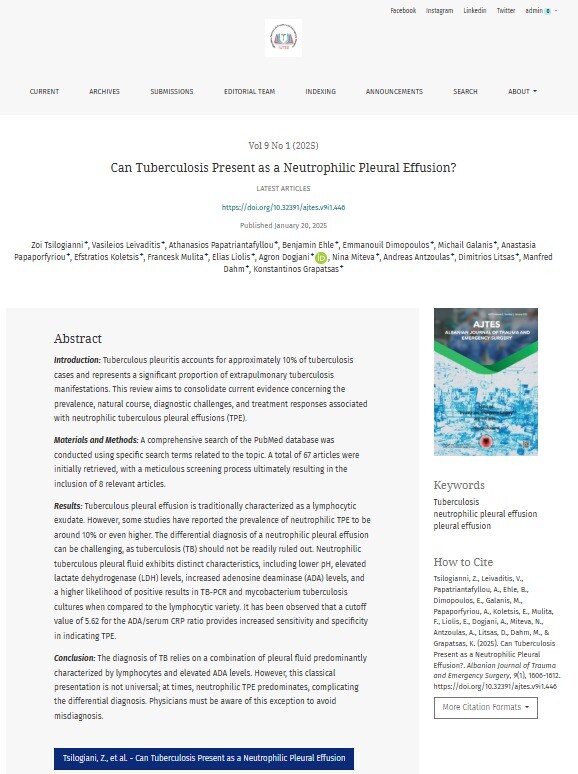
Introduction: Tuberculous pleuritis accounts for approximately 10% of tuberculosis cases and represents a significant proportion of extrapulmonary tuberculosis manifestations. This review aims to consolidate current evidence on the prevalence, natural course, diagnostic challenges, and treatment responses of neutrophilic tuberculous pleural effusions (TPE).
Materials and Methods: A comprehensive search of the PubMed database was conducted using specific search terms related to the topic. A total of 67 articles were initially retrieved, with a meticulous screening process ultimately resulting in the inclusion of 8 relevant articles.
Results: Tuberculous pleural effusion is traditionally characterized as a lymphocytic exudate. However, some studies have reported a prevalence of neutrophilic TPE of around 10% or higher. The differential diagnosis of a neutrophilic pleural effusion can be challenging, as tuberculosis (TB) should not be readily ruled out. Neutrophilic tuberculous pleural fluid exhibits distinct characteristics, including lower pH, elevated lactate dehydrogenase (LDH) levels, increased adenosine deaminase (ADA) levels, and a higher likelihood of positive results in TB-PCR and mycobacterium tuberculosis cultures when compared to the lymphocytic variety. It has been observed that a cutoff of 5.62 for the ADA/serum CRP ratio provides greater sensitivity and specificity for TPE.
Conclusion: The diagnosis of TB relies on a combination of pleural fluid predominantly characterized by lymphocytes and elevated ADA levels. However, this classical presentation is not universal; at times, neutrophilic TPE predominates, complicating the differential diagnosis. Physicians must be aware of this exception to avoid misdiagnosis.
Keywords: Tuberculosis, neutrophilic pleural effusion, pleural effusion